


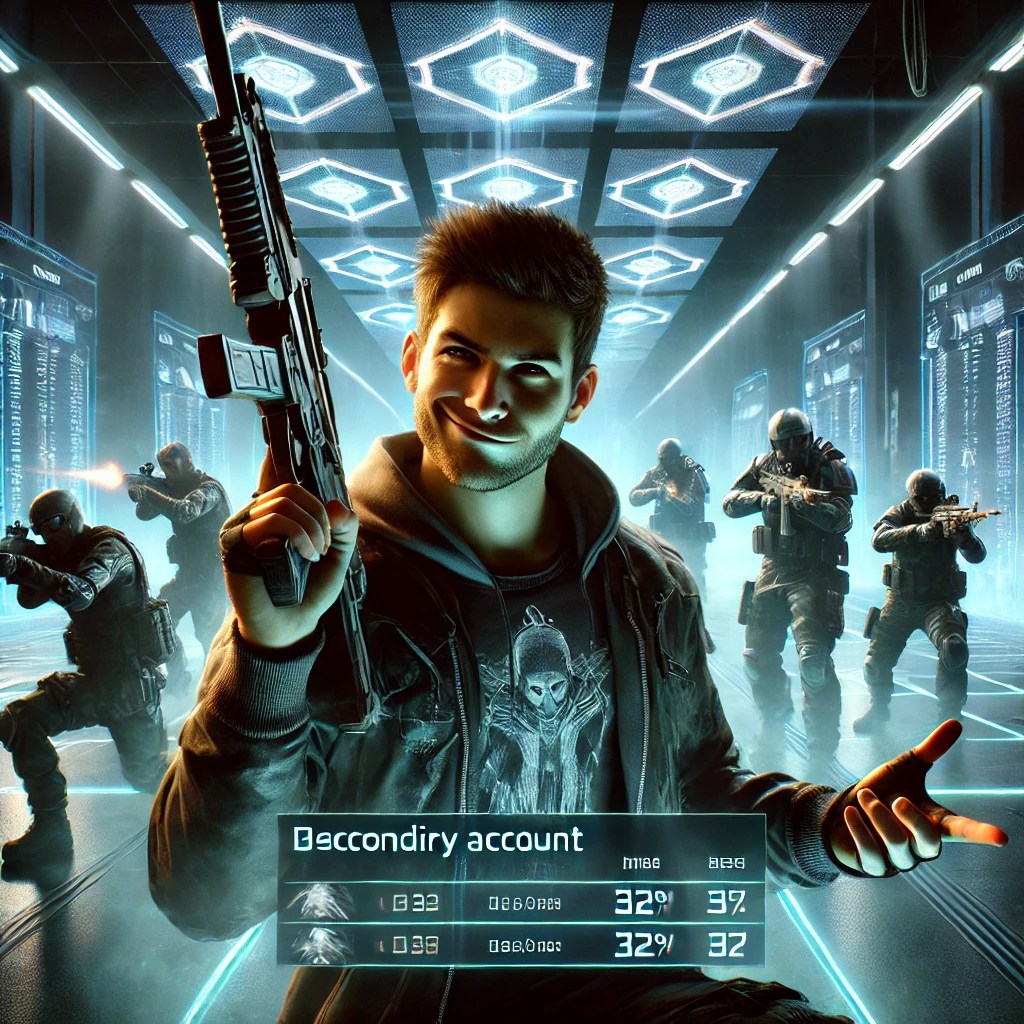
If you hear about smurfing in gaming, it may sound cute, but it has nothing to do with little blue guys! A smurf account is a secondary or alternate account created by a skilled player in a video game, often used to play against lower-ranked or less experienced opponents.
The term originated from Warcraft II players who used new accounts with names like “PapaSmurf” to disguise their high skill level.
Why Do People Use Smurf Accounts?
You may wonder why a skilled player might want to create a new smurf account at a beginner level. There are several reasons:
- Easier Games – High-rank players might create smurf accounts to dominate lower-level players for fun or to relieve stress.
- Practice New Strategies – Players may want to test new tactics, heroes, or weapons without affecting their main account’s rank.
- Play with Lower-Ranked Friends – A skilled player might use a lower-ranked account to join friends who are newer to the game.
- Avoid Long Queue Times – In some competitive games, high-ranked players face longer matchmaking times, so they create lower-rank accounts for quicker matches.
- Avoid Reputation or Suspensions – Some players who are banned or have a negative reputation may use smurfing as a way to keep playing under a new identity.
Is Smurfing Considered Bad?
Smurfing can be used for good- like practicing new strategies or playing with friends, but it can also be used in a bad way.
- Unfair Matches – It can create an unfair experience for lower-skilled players who get crushed by a much better opponent.
- Against Terms of Service – Some games, like League of Legends or Valorant, have rules against smurfing because it disrupts matchmaking balance.
- Toxic Behavior – Some smurf accounts are used for trolling, griefing, or harassing lower-ranked players without consequences.
Many gaming communities debate whether smurfing is just a part of gaming or a toxic practice that ruins the experience for others. Some games now implement systems to detect and prevent smurfing, matching suspected smurfs against others of similar skill levels.
How Different Games Handle Smurfing
Different games handle smurfing in various ways, with some taking strict action while others tolerate it as long as it doesn’t disrupt gameplay. Here’s how some popular games address smurfing:
1. League of Legends
- Anti-Smurf Measures: Riot Games actively tracks new accounts and detects when a skilled player is performing at a much higher level than expected. They use MMR (Matchmaking Rating) boosting to push smurfs into higher ranks faster.
- Detection System: If a new account consistently outperforms others, it will be matched against higher-ranked players sooner.
- Penalties: Riot has issued bans on smurf accounts in the past if they are used for toxic behavior.
2. Valorant
- Ranked Restrictions: Players must reach account level 20 before they can access competitive play, reducing the number of smurf accounts.
- Behavior Tracking: Riot’s Smurf Detection System identifies high-performance players and adjusts their matchmaking accordingly.
- Ban Waves: Smurf accounts used for boosting or unfair play can be banned.
3. Counter-Strike 2 (CS2)
- Prime Status System: Players who verify their accounts and play regularly get matched with others who also have Prime Status, helping to filter out smurfs.
- Trust Factor Matchmaking: CS2 uses a hidden reputation system that considers account history, playtime, and behavior to prevent smurfs from affecting lower-ranked players.
4. Overwatch 2
- Phone Number Verification: Players must attach a phone number to their account, making it harder to create multiple smurf accounts.
- Rank Adjustment: New accounts with high skill levels will quickly be ranked up.
- Ban Enforcement: Blizzard cracks down on accounts used for boosting or cheating.
5. Apex Legends
- Hidden MMR System: Apex Legends uses a behind-the-scenes ranking system, adjusting smurfs’ matchmaking based on performance.
- Smurf Detection: If a new account gets multiple high-kill games, it will be pushed into lobbies with stronger players.
- Limited New Account Perks: New accounts have restricted access to Ranked Mode until they meet certain playtime requirements.
6. Call of Duty (Warzone, MW3)
- SBMM (Skill-Based Matchmaking): Even in casual modes, smurfing is countered by matching players with others of similar skill.
- Shadowbans & Hardware Bans: If an account is flagged for suspiciously high performance, it might be shadowbanned (placed in cheater lobbies) or permanently banned.
7. Rocket League
- Fast Rank Climbing: New players who perform significantly above their supposed rank will rank up quickly, limiting their impact on lower-skilled lobbies.
- Ban Waves for Boosting: Psyonix actively bans accounts that are found boosting others through smurfing.
8. Fortnite
- SBMM in Casual Modes: Fortnite uses skill-based matchmaking even in non-ranked modes, making it harder for smurfs to dominate weaker players.
- Ban Enforcement: Epic Games has taken action against smurfing when it is used to harass players.
9. Dota 2
- Phone Verification for Ranked: To play ranked matches, players must verify their accounts with a phone number.
- Behavior Score System: Smurf accounts with toxic behavior may be flagged and placed in low-priority matchmaking.
- Fast Rank Adjustments: The game detects high-skill players and ranks them appropriately within a few matches.
Do Any Games Allow Smurfing?
While most games try to prevent smurfing, some, like Minecraft, Rust, or PUBG, don’t have strict measures against it. Since these games don’t rely heavily on skill-based ranking, smurfing is less of an issue.
How to Spot a Smurf Account
If you are playing a game and suspect you may be up against a smurf, here’s a few general ways to spot them, followed by game-specific techniques.
- Unrealistic K/D Ratios or High Scores
- In shooters like Call of Duty, Apex Legends, CS2, or Valorant, a smurf will often have an extremely high kill-to-death (K/D) ratio, such as 20+ kills with no deaths in lower-ranked lobbies.
- In MOBA games like League of Legends or Dota 2, they may dominate their lane without effort, get high kill streaks, or snowball quickly.
- Strange Movement & Aim for a Low Rank
- If a player is bunny hopping, quick-scoping, flick-shotting, or perfectly pre-aiming corners, yet they are in a beginner lobby, they are likely a smurf.
- In games like Overwatch or Fortnite, smurfs often have incredibly smooth movement and near-perfect tracking.
- New Account, But Playing Like a Pro
- If their account has very few games played but they are executing high-level strategies, they are likely an experienced player using a new account.
- Check their profile levels—if they are low level but playing like a veteran, they are probably smurfing.
- Unusual Game Knowledge for Their Rank
- Smurfs often know spawn locations, shortcuts, advanced mechanics, or high-level strategies that new players wouldn’t.
- Example: A Dota 2 or League of Legends smurf might ward in advanced spots or perfectly time jungle camps.
- In FPS games, a smurf might pre-fire (shoot before an enemy even appears) because they already know common hiding spots.
- Disproportionate Matchmaking Behavior
- A smurf might have a win streak that seems unrealistic (e.g., 10+ games in a row without breaking a sweat).
- They might have abnormally high ranks in other game modes while being low-ranked in the one you’re playing.
- Example: In Rocket League, if someone is playing at Bronze rank but pulling off aerial dribbles and ceiling shots, it’s a dead giveaway.
- Excessive Trash Talk or Overconfidence
- Some smurfs enjoy mocking or belittling other players because they know they have a huge skill advantage.
- They may act overconfident or playfully toxic, saying things like “It’s too easy” or “You guys are bots.”
Game-Specific Smurf Detection
League of Legends / Dota 2
- Unusual farming efficiency: Farming near-perfectly while avoiding fights.
- Aggressive playstyle: Playing without fear, diving towers, and making risky plays that pay off.
- Fast Ranked Climbing: Winning 10+ games in a row with flawless KDA.
- Unranked but playing like a challenger: Someone who executes perfect combos, dodges skill shots flawlessly, or manages macro play exceptionally well.
Valorant / CS2
- One-tap headshots consistently: If someone lands every shot perfectly in a beginner-level game, they’re likely a smurf.
- Strange pre-aiming behavior: They seem to always check the right angles or fire at you before you even appear.
- Unusual movement mechanics: Bunny hopping, quick peeking, or using pro-level tactics in low ranks.
Overwatch 2
- Advanced mechanics in Bronze/Silver lobbies: A player who can solo-carry with perfect positioning, movement, and aim in low ranks.
- Consistently high eliminations: Smurfs tend to rack up 40+ kills in a single match in lower tiers.
- Low level, but plays like a Grandmaster: If their Battle Pass or account level is low, but they play at a pro level, it’s a smurf.
Apex Legends / Warzone / Fortnite
- Insane K/D ratio for a new account: Someone with 15+ kills per game in Bronze/Silver lobbies is likely a smurf.
- Perfect recoil control and movement: They use tap strafing, slide jumping, or perfect aim tracking even though their level suggests they’re new.
- Hot-dropping into fights and destroying entire teams: A common smurf behavior in battle royales.
Rocket League
- Aerials and flip resets in low ranks: If someone is consistently hitting advanced mechanics in Bronze, Silver, or Gold, it’s a smurf.
- Zero hesitation in rotations: Smurfs have high-level positioning and don’t waste movement.
- Fast ranking up: If a player is jumping multiple ranks in just a few games, they are probably smurfing.
How to Deal with Smurfs
If you suspect someone is smurfing, here’s what you can do:
- Report Them – Most games have a reporting system for unfair play or smurfing.
- Don’t Get Discouraged – Losing to a smurf doesn’t reflect your skill. It’s unfair matchmaking, not your fault.
- Check Match History – If you suspect smurfing, checking their stats might reveal a sudden drop in rank or a brand-new account with insane performance.
- Play with Friends – Queueing with teammates at your skill level can help avoid getting matched against smurfs.
- Games With Anti-Smurf Features – Some games (like Valorant, Overwatch, and CS2) have strong smurf detection, so you might not run into them as much.
The Impact of Smurfing in Gaming
Smurf accounts have long been a controversial part of online gaming. While some players use them for practice or to play with lower-ranked friends, others exploit them to dominate beginner lobbies, creating an unfair experience.
Many game developers are now implementing strict anti-smurf measures, such as skill-based matchmaking, account verification, and rank detection, to maintain balanced and enjoyable gameplay.
If you suspect someone is smurfing, don’t let it ruin your experience. Report unfair play, focus on improving your skills, and remember that gaming is meant to be fun for all players, regardless of skill level.
Have you ever encountered a smurf in your favorite game? Share your experience in the comments below!
Discover more from Play It Again Mam
Subscribe to get the latest posts sent to your email.
 Play It Again Mam
One thought on “What is Smurfing in Gaming?”